(212) 461 0094

The Italian Language FoundationThe Italian Language Foundation

Promoting and Supporting Italian Language Education

  • Home
  • About
    • Board & Team
    • Emerging Leaders
    • Media
  • Our Impact
    • Events
    • Blog
  • Join ILF
    • Student
    • Teacher
    • Emerging Leaders
    • Parent Advocates
  • Get Involved
    • Corporate Sponsorship
  • Donate

San Benedetto il Moro, Sicily, and a New Journey Through Memory

THE ITALIAN LANGUAGE FOUNDATION / April 10, 2026 / Blog /

Italian Translation

By Fred Kuwornu

I am currently developing a new documentary project on St. Benedict The Moor, the Black saint born in Sicily whose life opens a powerful window onto faith, migration, race, and belonging in Italian history.

Born in San Fratello, near Messina, in 1526, to African parents who had been enslaved, San Benedetto later lived in the Palermo area, where he became known for his humility, spiritual strength, and deep connection to the poor. Over time, his story traveled far beyond Sicily and became part of a wider Black Catholic devotion across Italy, Brazil, Latin America, African-Americans in the United States.

What interests me most is not only his sanctity, but also what his life reveals about the African presence in Italy and Europe, and how memory can survive through religion, ritual, and popular devotion. Even in New York, his legacy can still be felt in churches dedicated to St. Benedict the Moor in both Queens and Manhattan. For me, this project is both historical and personal. It is a journey through Sicily and beyond, searching for a figure who helps us rethink Italy’s past and its connections to a broader global history.

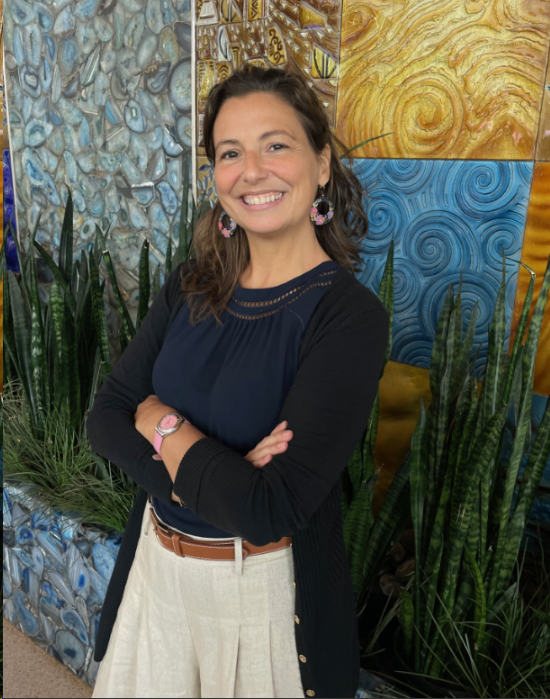
Fred Kudjo Kuwornu is an Afro Italian and U.S. socially engaged artist, filmmaker, curator, and scholar based in New York. His work explores race, identity, memory, and the African presence in Europe and the wider diaspora through documentary cinema, archives, and visual storytelling. His recent documentary We Were Here – The Untold History of Black Africans in Renaissance Europe received the Black Reel Award for Outstanding Documentary, was officially submitted for consideration in the 2026 Academy Awards documentary category, he received the Dan David Prize 2025, the largest History’s prize award and the Folgers Library Fellowship

San Benedetto il Moro, La Sicilia e Un Nuovo Viaggio Nella Memoria

THE ITALIAN LANGUAGE FOUNDATION / April 10, 2026 / Blog, Italian Translation /

Traduzione Inglese

Di Fred Kuwornu

Sto sviluppando un nuovo progetto documentario su San Benedetto il Moro, il santo nero nato in Sicilia, la cui vita apre una prospettiva potente su fede, migrazione, razza e appartenenza nella storia italiana.

Nato a San Fratello, vicino Messina, nel 1526, da genitori africani che erano stati schiavi, San Benedetto visse poi nell’area di Palermo, dove fu conosciuto per la sua umiltà, la sua forza spirituale e il suo legame profondo con i poveri. Con il tempo, la sua storia si diffuse ben oltre la Sicilia e divenne parte di una più ampia devozione cattolica nera tra Italia, Brasile, America Latina e diaspora africana.

Ciò che mi interessa non è soltanto la sua santità, ma anche ciò che la sua vita rivela sulla presenza africana in Italia e in Europa, e sul modo in cui la memoria sopravvive attraverso religione, rituali e devozione popolare. Anche a New York la sua eredità è ancora percepibile in chiese dedicate a San Benedetto il Moro nel Queens e a Manhattan.

Per me questo progetto è insieme storico e personale. È un viaggio attraverso la Sicilia e oltre, alla ricerca di una figura che ci aiuta a ripensare il passato italiano e i suoi legami con una storia globale più ampia.

Fred Kudjo Kuwornu è un artista, regista, curatore e studioso afro-italiano e americano impegnato nel sociale, che vive a New York. Il suo lavoro esplora temi quali la razza, l’identità, la memoria e la presenza africana in Europa e nella diaspora in senso lato attraverso il cinema documentario, gli archivi e la narrazione visiva. Il suo recente documentario *We Were Here – The Untold History of Black Africans in Renaissance Europe* ha ricevuto il Black Reel Award come Miglior Documentario, è stato ufficialmente candidato nella categoria documentari per gli Oscar 2026 e gli è valso il Dan David Prize 2025 – il premio più prestigioso nel campo della storia – nonché la Folgers Library Fellowship.

A Short Journey Through Italian Jewish history

THE ITALIAN LANGUAGE FOUNDATION / March 30, 2026 / Blog /

Italian Translation

By Samuel Cohen

How interesting it was to visit the Italian Jewish museum in Jerusalem during a summer program in 2021. One of my counselors on the program also worked at the museum, and she gave my family and me a personal tour.

The museum was beautiful, intimate, and full of history. I learned a great deal about the Jewish community in Italy and the significant contributions Italian Jews have made to Italian society over the centuries. One of the highlights of the visit was seeing one of the oldest synagogues in the world. The museum had acquired the remains of a crumbling medieval synagogue from Italy and transported it to Israel many years ago. It has since been carefully restored and is still used by Italian Jews living in Israel, especially on holidays. The synagogue is nearly a thousand years old, and its design and atmosphere are truly unique.


This experience deepened my appreciation for Italian culture and history, and it also connected nicely with my studies in high school, where I learnt Italian in a club and developed an early interest in the language and the country. 

Next semester I plan to learn in Milan and I hope the experience will be everlasting and impactful.

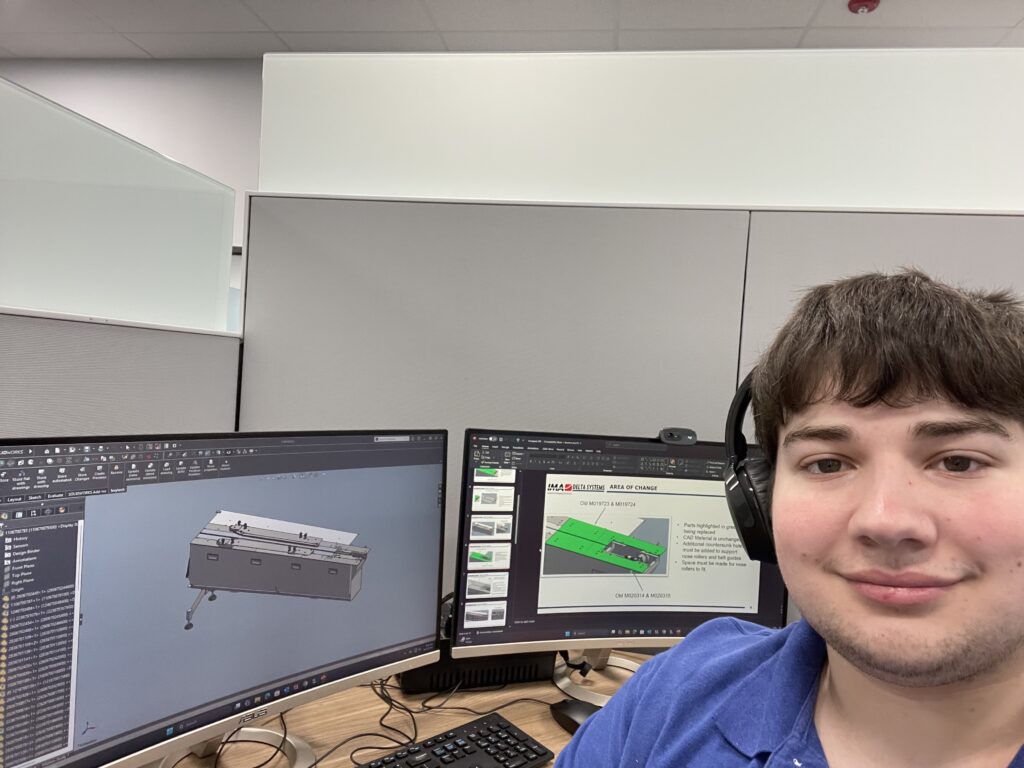
I am a junior at Brandeis university currently studying abroad in Milan. I am a triple major in business, physics and Hebrew with a minor in Italian.

Breve Viaggio Nella Storia Ebraica Italiana

THE ITALIAN LANGUAGE FOUNDATION / March 30, 2026 / Blog, Italian Translation /

Traduzione Inglese

Di Samuel Cohen

Quanto è stato interessante visitare il museo degli ebraici italiani a Gerusalemme mentre ero in vacanza estiva nel 2021. Uno dei miei istruttori ha lavorato al museo e ha fatto un tour personalizzato a me e alla mia famiglia ed è stato molto istruttivo. 

Penso che il museo sia magnifico, per la sua intimità e per la sua storia. Io ho imparato molto della comunità ebraica italiana. Anche i contributi significativi che la comunità ebraica ha apportato alla società italiana nel corso dei secoli. Uno degli aspetti più significativi della visita è che ho visto una sinagoga che è una delle sinagoghe più vecchie del mondo. Il museo ha acquisito i resti di una sinagoga medievale in rovina dall’Italia e li ha trasportati in Israele molti anni fa. La sinagoga da allora è stata accuratamente restaurata e riportata al suo antico splendore. Oggi è ancora in uso per la preghiera, durante il sabato e le feste, per gli ebrei italiani che vivono in Israele e i loro discendenti. Penso che l’unicità della sinagoga sia davvero sorprendente perché ha quasi mille anni ed è ancora in uso anche se in una posizione diversa. Tuttavia il suo design e l’atmosfera, soprattutto mentre ero lì, sono davvero unici.


La mia esperienza mi ha fatto approfondire il mio interesse della cultura e della storia italiana. Inoltre, la visita alla sinagoga era collegata con i miei studi al liceo, dove ho imparato l’italiano in un club e ho sviluppato un precoce interesse per la lingua e il paese. 

Il prossimo semestre studierò a Milano e spero che l’esperienza sarà eccezionale e di grande impatto.

Sono uno studente del terzo anno alla Brandeis University e attualmente studio all’estero a Milano. Ho una tripla laurea in economia, fisica ed ebraico, con una specializzazione in italiano.

Why soccer in Italy is more than a game

THE ITALIAN LANGUAGE FOUNDATION / March 14, 2026 / Blog /

Italian Translation

By Gabriel Harmetz

In Italy, soccer isn’t something you discover through school teams or organized leagues.

It’s already there when you’re growing up — in the street, in the courtyard, in the symbols stitched onto city flags and club jerseys. Long before you ever kick a ball yourself, someone will ask you a question that quietly shapes your identity: Which team are you?

Unlike in the United States, where sports like football or baseball are deeply tied to schools, colleges, and structured programs, Italian soccer grows from the ground up. It starts informally, in neighborhoods and small towns, long before institutions enter the picture. Passion comes first; organization follows later, if at all.

This is not uniquely Italian. Countries like Brazil, Germany, France, and much of Africa share a similar relationship with the game. In these places, soccer is learned outside of classrooms and athletic departments — played in alleyways, dirt fields, schoolyards, and empty lots. Wherever soccer grows from the street rather than the school system, belonging comes before rules, and loyalty forms early.

Italy fits squarely into this tradition.

Part of that bond comes from the way Italian teams are rooted in local identity. Club names, colors, and crests often draw from medieval symbols, coats of arms, patron saints, animals, or ancient civic emblems. Changing a team’s colors or symbol is not seen as a marketing update — it can spark outrage. For fans, the club represents a city, a region, or even a family history, not just a roster of players.

This sense of continuity helps explain why soccer memories in Italy often feel personal, even intimate. Certain matches live on not simply as sporting events, but as shared experiences people remember watching together — in crowded living rooms, neighborhood bars, or public squares. World Cup games against Germany, for example, are not recalled for their statistics alone, but for the arguments, celebrations, and silences that followed.

Some players, too, transcended the sport entirely. Diego Maradona is the most obvious case. In Italy, he wasn’t admired merely for his skill; he was mythologized. He gave fans stories, symbols, and debates that lasted decades. Even those who never saw him play still talk about him as part of a shared cultural memory, not unlike a legendary artist or political figure.

Watching soccer in Italy has long been a social ritual. Even today, many matches are followed the same way they always have been: standing in bars, surrounded by people who may be strangers but feel temporarily familiar. Older men argue loudly about referees, tactics, and missed chances. Younger fans listen, absorbing not just the rules of the game but its language and rhythms. The match becomes an excuse for conversation, disagreement, and belonging.

This stands in contrast to the American sports experience, which is often more structured and scheduled, tied to seasons, programs, and clear hierarchies. In Italy, soccer is messier. It invites passion and frustration in equal measure. There is room for genius, improvisation, and drama — sometimes too much of it.

Ironically, the country that formalized soccer’s rules, England, offers a counterpoint. In the late nineteenth century, the sport developed within elite public schools like Eton before becoming professional and mass-oriented later on. In Italy, the process was almost reversed. The game was loved long before it was organized.

That may be why Italian soccer can be difficult to export in its full complexity — but also why it remains impossible for many Italians to abandon. Soccer there survives not because it is always efficient, fair, or even beautiful, but because it is shared. And shared things, especially those rooted in everyday life, tend to last.

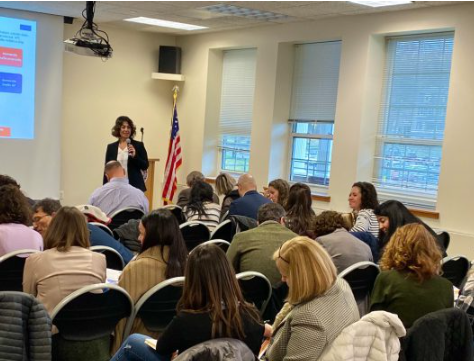
Gabriel Harmetz a freshman studying finance at the Robert H. Smith Business School at the University of Maryland, with a passion for skiing and basketball (and sports in general) and for my Italian roots and language.

  • 1
  • 2
  • 3
  • …
  • 35
  • Next Page »

Contact Us

TELEPHONE: (212) 461 0094

PHYSICAL ADDRESS:

Italian Language Foundation, Inc.
8 East 69th Street
New York, New York 10021

MAILING ADDRESS:

Italian Language Foundation, Inc.
P.O. Box 112
28 Maple Place
Manhasset, New York 11030

Important Links

  • About
  • Our Impact
  • Join ILF
  • Get Involved
  • Blog
  • Membership
  • Contact

Newsletter


Word of the Day

  • Il finocchio: fennel

    Part of speech: noun Example sentence:Mettiamo anche un po' di finocchio nell'insalata? Sentence meaning: Should we also add some fennel to the salad?

Copyright © 2026 · Italian Language Foundation